
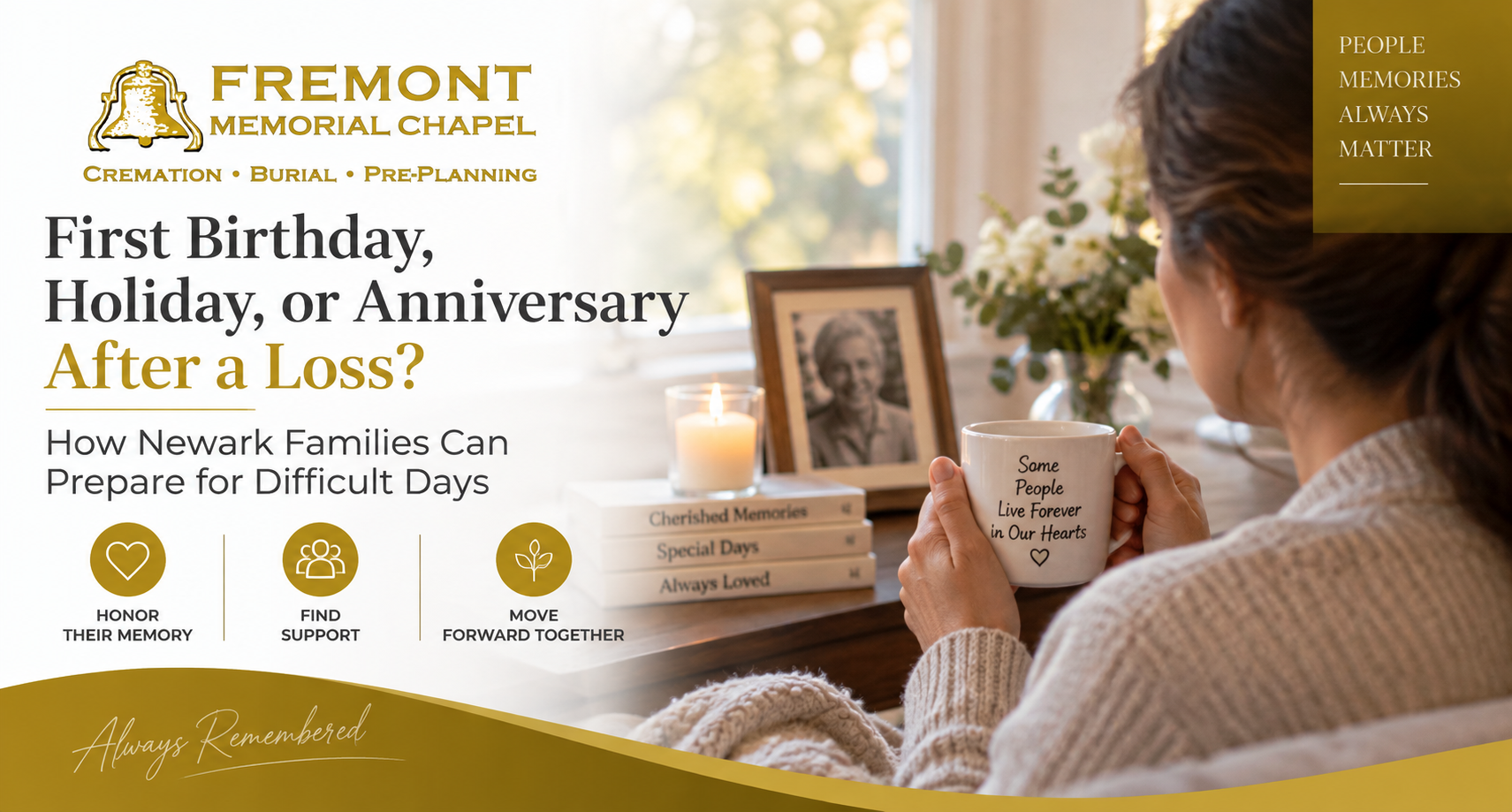
First Birthday, Holiday, or Anniversary After a Loss? How Newark Families Can Prepare for Difficult Days
After losing someone you love, certain dates can suddenly feel very different. A birthday that once meant choosing a cake, a holiday filled with family traditions, or an anniversary you celebrated every year may now bring sadness, memories, or uncertainty about what to do.
For families in Newark, CA, these “firsts” after a death can be especially difficult. Grief does not follow a fixed schedule, and people within the same family may respond differently. Fremont Memorial Chapel’s grief resources similarly emphasize that each person copes with loss in their own way and that support may continue well beyond the funeral.
Why Special Dates Can Feel So Different
Birthdays, holidays, anniversaries, and family celebrations often carry years of memories. When someone is no longer physically present, familiar traditions can highlight that absence.
You might feel sad weeks before the date arrives. Someone else may feel fine until a particular song, meal, photograph, or family tradition brings back memories unexpectedly.
Neither response means someone is grieving incorrectly. The existing Newark grief resources from Fremont Memorial Chapel recognize that grief can affect everyday routines and emotions differently for each person.
Understanding this can help families approach important dates with fewer expectations about how everyone “should” feel.
Talk About the Day Before It Arrives
Families sometimes avoid mentioning an upcoming birthday or anniversary because they are afraid of making someone sad. But avoiding the subject can also leave everyone wondering what others expect.
Consider having a simple conversation beforehand.
Do family members want to gather? Would they rather keep the day quiet? Should an old tradition continue, change, or be skipped this year?
There does not have to be one answer for the entire family. One person may want to visit a meaningful place while another may prefer to spend the day privately. Making room for those differences can reduce pressure.
Decide Which Traditions Still Feel Comfortable
The first holiday after a loss often raises difficult questions.
Should you set the table the same way? Attend the usual family gathering? Prepare your loved one’s favorite food? Exchange gifts as usual?
You do not need to preserve every tradition, and you do not have to remove all of them either.
Choose what feels manageable this year. Perhaps you keep one meaningful tradition and change another. Families looking for grief support services in Newark may also find it helpful to remember that support is not about rushing someone through grief but giving them room to process loss at their own pace.
Find a Simple Way to Remember Them
Remembering someone does not require a large memorial event.
You might display a favorite photograph, prepare a meal they loved, play a meaningful song, light a candle, visit a special location, share stories, or invite family members to write down favorite memories.
Children can participate too. They might draw a picture, create a memory box, or share something they remember about the person.
Fremont Memorial Chapel’s funeral-planning resources also suggest using photographs, memory tables, books, music, and personal items as ways of remembering and honoring a life. Those same ideas can be adapted more simply for birthdays and anniversaries.
Give Yourself Permission to Change Plans
You may make plans several weeks ahead and feel completely different when the day arrives.
That is okay.
A family dinner may suddenly feel overwhelming. You might decide to stay for only part of a gathering or spend more time alone than expected. Alternatively, you may discover that being around friends and relatives provides comfort.
Try not to turn the day into a test of how well you are “handling” grief. Adjusting your plans does not mean you have failed to cope.
Let Family Members Grieve Differently
One of the hardest parts of family grief is recognizing that people may respond to the same loss in very different ways.
One person may want to talk about the loved one throughout the day. Another may become quiet. Someone might cry, while another laughs while remembering an old family story.
Children and teenagers may move between sadness and normal activities quickly.
Try not to measure another person’s grief by how visible it is. Instead, ask what would make the day easier and respect reasonable differences in how family members choose to participate.
Plan Some Support for After the Date
Sometimes people prepare themselves for the birthday or anniversary but are surprised by how they feel afterward.
Once relatives leave and activities end, emotions may become stronger. Consider keeping the following day relatively flexible if possible. You might call a supportive friend, take a quiet walk, attend a support group, or simply give yourself time without unnecessary commitments.
Fremont Memorial Chapel offers continuing grief resources, including online support, group grief support, interactive resources, and a 365-day grief-support email program.
Know When Additional Support May Help
Difficult emotions around an anniversary or holiday can be part of grieving, but you do not have to manage everything alone.
Friends, relatives, faith communities, grief-support groups, counselors, and other qualified professionals can provide different kinds of support. If grief is persistently interfering with everyday functioning or you are concerned about your emotional well-being, consider speaking with a qualified healthcare or mental-health professional.
If someone is in immediate danger or thinking about self-harm, seek emergency or crisis support right away.
Final Thoughts
The first birthday, holiday, or anniversary after losing someone can bring emotions you did not expect. There is no single correct way for Newark families to approach these days.
You can keep traditions, change them, create a small remembrance, spend time with family, or choose a quieter day. What feels right this year may also change next year.
Preparing ahead cannot remove grief, but it can reduce some of the uncertainty surrounding an important date. Give yourself and your family permission to remember, adjust plans, accept support, and experience the day in whatever respectful way feels most manageable.